Life is always moving. Even when we feel stuck, even when we cling to what is familiar, the world continues to shift beneath our feet. In the Buddhist tradition, this truth is called anicca—impermanence. It’s not meant to frighten us. It’s meant to wake us up.
We are often sad and suffer a lot when things change, but change and impermanence have a positive side. Thanks to impermanence, everything is possible. Life itself is possible. If a grain of corn is not impermanent, it can never be transformed into a stalk of corn. If the stalk were not impermanent, it could never provide us with the ear of corn we eat. If your daughter is not impermanent, she cannot grow up to become a woman. Then your grandchildren would never manifest. So instead of complaining about impermanence, we should say, “Warm welcome and long live impermanence.” – Thich Nhat Hanh
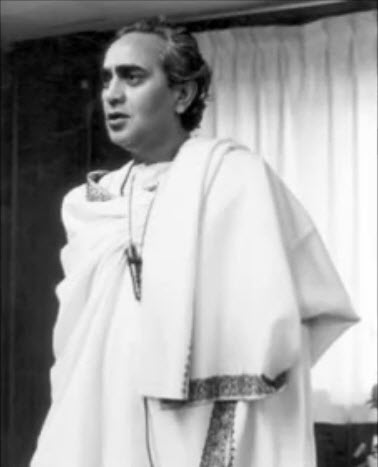
Lately, I’ve been reflecting on how we relate to the transitions in our lives: the endings, the beginnings, the subtle shifts in identity, purpose, or direction. And I’ve been thinking about two of my beloved Himalayan masters whose lives beautifully embodied the art of moving through change with grace: Swami Rama and his disciple Dr. Aria, later known as Swami Veda Bharati.
Their lives remind us that transitions are not disruptions on the path.
They are the path.
so- impermanence
didn’t teach me much today-
maybe tomorrow – Lyn Coffin
The Beauty of Impermanence
Impermanence is often misunderstood as loss. But in the Dharma, impermanence is the very reason awakening is possible. If nothing could change, nothing could grow. Nothing could heal. Nothing could open.
Every transition—wanted or unwanted—is a doorway.
A chance to soften, to listen, to realign.
When we celebrate transitions, we’re not celebrating chaos.
We’re celebrating the ongoing creativity of life.
Once we grasp the ideas of impermanence and no permanent self (non-self), we begin to realize that nothing we know of has a separate existence. You cannot be by yourself, alone. I cannot be by myself, alone. We all have to inter-be with each other and the whole cosmos. The insight of Interbeing means that we are interconnected with everything around us, near and far. We all have to recognize that our existence depends upon the existence of others and the whole earth around us. – Jerome Freedman, PhD, Mindfulness Breaks: Your Path to Awakening
Swami Rama: A Master of Fluidity
Swami Rama of the Himalayas moved through life with a remarkable ability to adapt without losing his center. Trained in the ancient cave monasteries, he later stepped into the modern world with ease—teaching scientists, guiding householders, and bridging worlds that rarely meet.
He showed that spiritual maturity isn’t rigidity.
It’s responsiveness.
He taught that life itself is a series of initiations, each one preparing us for the next unfolding of consciousness. Transitions weren’t obstacles to him—they were invitations.
Swami Rama initiated me into Hatha Yoga and mantra meditation in his ashram north of Chicago in 1970. We’d bring our infant sun to Sunday darshan and everyone drooled over the baby.
Swami Veda Bharati: A Life of Sacred Becoming
His disciple, Swami Veda Bharati, embodied this same fluidity. A child prodigy in Sanskrit and philosophy, he taught the Pantanjali Yoga Sutras at nine and lectured internationally as a young man. Later, under Swami Rama’s guidance, he stepped into the renunciate life and became a global teacher of meditation.
I met him also at Swami Rama’s ashram. On one morning, I heard him say, “Celebrate transitions,” and celebrate life just as it is.
What stands out is how naturally he moved through each transition:
- from scholar to monk,
- from Dr. Aria to Swami Veda Bharati,
- from student to lineage-holder,
- from embodied teacher to a presence that continues through his writings and communities.
There was no clinging to identity.
No fear of change.
Only trust in the unfolding.
His life is a reminder that transitions are not departures from who we are—they are expressions of who we are becoming.
How We Can Celebrate Our Own Transitions
Becoming Truly Alive
The teaching of the Buddha tells you clearly and plainly to make this the most magnificent and wonderful moment of your life. This present moment must become the most wonderful moment in your life. All you need to transform this present moment into a wonderful one is freedom. All you need to do is free yourself from your worries and preoccupations about the past, the future, and so on.
The deep insight of impermanence is what helps us do this. It is very useful to keep our concentration on impermanence alive. You think the other person in your life is going to be there forever, but that is not true. That person is impermanent, just like you. So if you can do something to make that person happy, you should do it right away. Anything you can do or say to make them happy – say it or do it now. It’s now or never. – Thich Nhat Hanh
We don’t need to be Himalayan sages to walk through change with grace. We can begin with small, intentional practices:
Pause at thresholds
Before beginning something new—or ending something old—take a breath.
Feel the moment of crossing.
Honor what is ending
Even small endings deserve gratitude.
They shaped us.
Welcome what is beginning
Beginnings are tender.
Meet them with kindness rather than pressure.
Remember your lineage
Just as Swami Veda carried forward Swami Rama’s light,
we carry forward the wisdom of those who shaped us.
Transitions are how teachings move through time.
Once we grasp the ideas of impermanence and no permanent self (non-self), we begin to realize that nothing we know of has a separate existence. You cannot be by yourself, alone. I cannot be by myself, alone. We all have to inter-be with each other and the whole cosmos. The insight of Interbeing means that we are interconnected with everything around us, near and far. We all have to recognize that our existence depends upon the existence of others and the whole earth around us. – Jerome Freedman, Mindfulness Breaks: Your Path to Awakening
A Closing Reflection
Transitions are not always easy. They can stir uncertainty, grief, excitement, or all three at once. But when we meet them with awareness, they become sacred moments—moments when life invites us to step more fully into ourselves.
May we learn to celebrate transitions,
not because they are comfortable,
but because they are true.May we walk through them with the steadiness of Swami Rama,
the grace of Swami Veda Bharati,
and the clear seeing of the Buddha.And may each transition—large or small—be a doorway to awakening.
Note: This was created for a Dharma Talk on April 22, 2026. Sorry if you missed it!







Speak Your Mind
You must be logged in to post a comment.